
TLDR
-
Shipping stocks rose after Strait of Hormuz disruptions halted crossings
-
Maersk and Hapag-Lloyd shares climbed more than 4%
-
Major carriers suspended vessel routes through the region
-
Oil and gas prices surged alongside shipping shares
-
Analysts say the impact may remain largely regional for container flows
Get live prices, charts, and KO Scores from KnockoutStocks.com, the data-driven platform ranking every stock by quality and breakout potential.
Shipping stocks moved higher Monday after vessel disruptions near the Strait of Hormuz forced major carriers to reroute services. Shares across container and tanker operators climbed as investors reacted to tightening shipping capacity and rising energy prices.
European shipping companies led early gains as rerouting announcements spread across the sector. Shares of major container lines rose more than 4% in early trading as markets adjusted to supply chain changes.
Several carriers suspended vessel crossings through the Strait of Hormuz due to safety concerns. Operators confirmed they were diverting ships away from the region until further notice.
Maersk, Hapag-Lloyd, and CMA CGM began rerouting services around Africa to avoid affected routes. These changes reduced available capacity across some global shipping lanes.
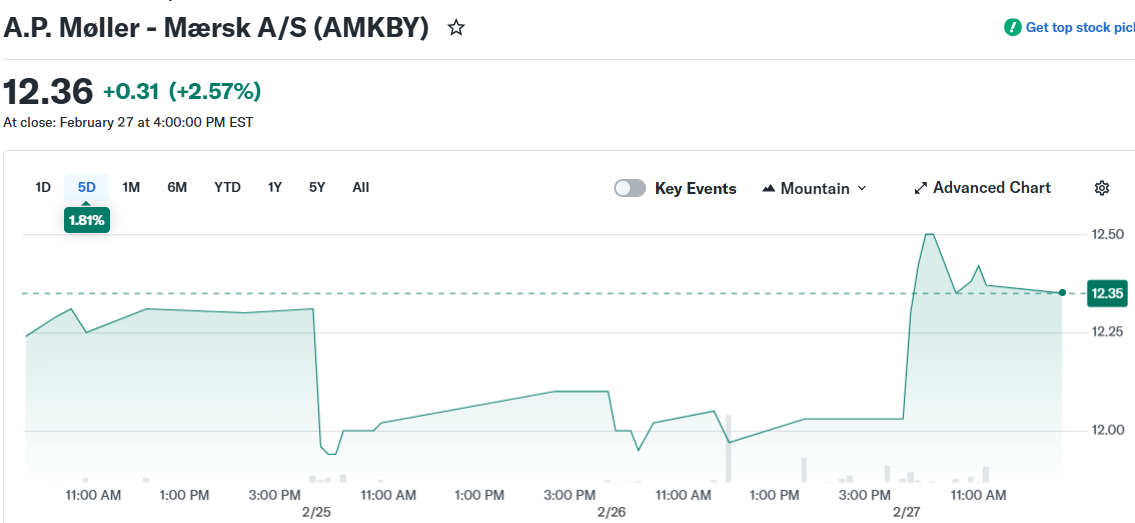
Energy markets also moved higher following the disruptions. Brent crude and U.S. crude futures rose more than 7%, while natural gas prices gained over 4%.
Shipping Routes Adjust Across Key Corridors
Shipping companies shifted routes after escalating tensions and reported attacks in the region. The Strait of Hormuz remains a major transit route for global energy shipments and regional trade.
Some carriers also moved vessels away from the Suez Canal and nearby corridors. Rerouting activity tightened shipping capacity across several international routes.

Brokerages said tighter capacity could support freight rates in the near term. Logistics and tanker companies also recorded share price gains as transport stocks moved higher.
Nordic tanker operators and vehicle carriers posted gains alongside container shipping names. The broader transport sector tracked the rise in energy prices and shipping demand.
Dubai’s Jebel Ali port handled about 15.5 million TEU in 2024, representing roughly 8% of global container volumes. While large in scale, the port does not serve the core Asia-Europe container corridor.
Analysts Assess Market Impact
Analysts said disruptions at Hormuz are meaningful but largely regional for container shipping. By comparison, disruptions at the Suez Canal tend to have wider global implications for container networks.
Before the Red Sea crisis, the Suez Canal handled about 22% of global container traffic. Current disruptions near Hormuz are expected to affect regional shipping patterns more directly.
Some brokerages maintained cautious views on container shipping fundamentals. Oversupply in the sector continues to weigh on freight rate forecasts despite short-term disruptions.
Forecasts show container fleet growth could outpace demand through 2026. Analysts said capacity expansion remains a key factor influencing rate trends.
Shipping and logistics stocks remained higher in early trading as carriers continued to reroute vessels and monitor developments around the Strait of Hormuz. Markets are watching whether vessel traffic resumes normal patterns across the region.
Considering a new stock? You may want to see what’s on our watchlist first.
Our team at Knockout Stocks follows top-performing analysts and market-moving trends to spot potential winners early. We’ve identified five stocks gaining quiet attention that could be worth watching now. Create your free account to unlock the full report and get ongoing stock insights.